FDA Clears Phase 2a Trial of Dual-Target Antibody NAV-240 for HS
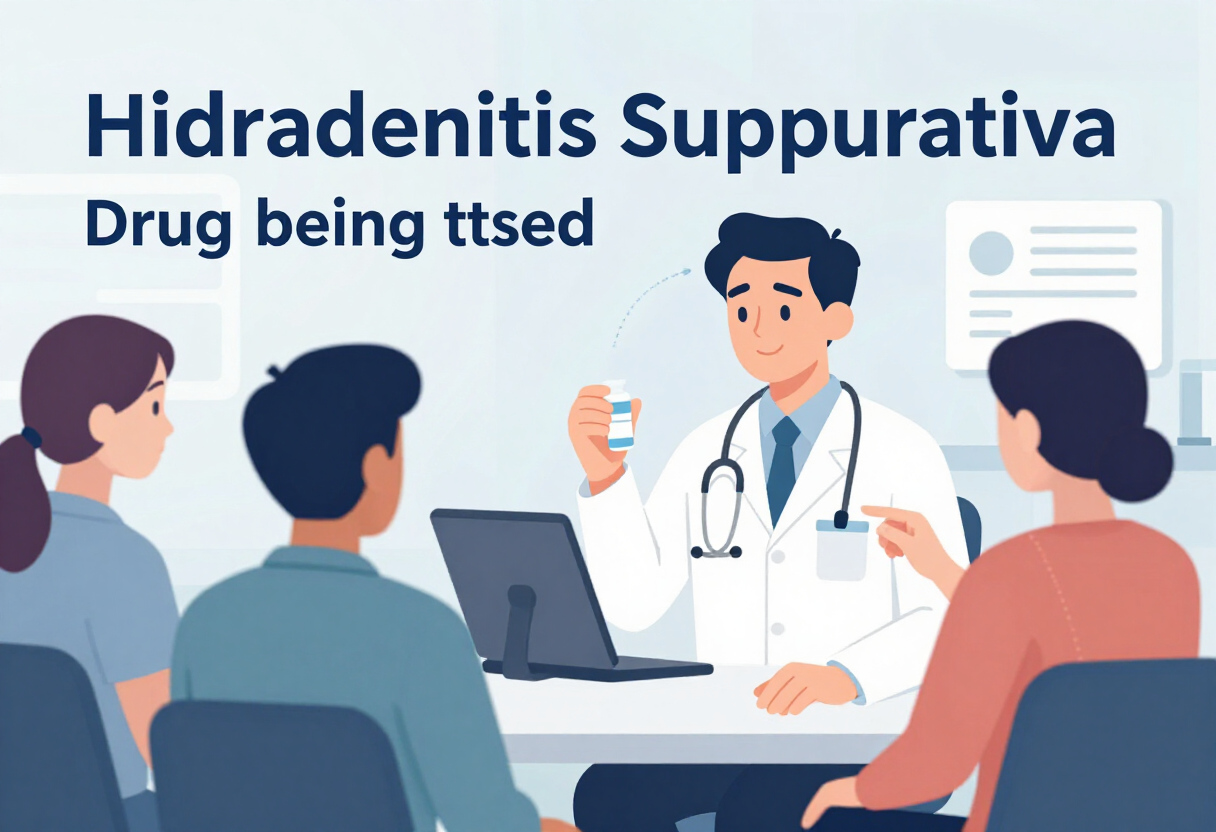
Navigator Medicines has begun dosing patients in an FDA-cleared phase 2a trial of NAV-240, a dual-target antibody blocking TNF and O40L in moderate to severe HS.
Updated
The takeaway
- The FDA cleared a phase 2a trial of NAV-240 in moderate to severe hidradenitis suppurativa; Navigator Medicines has begun dosing patients.
- NAV-240 blocks both TNF and OX40 ligand, targeting two inflammatory pathways instead of one.
- Phase 2a results are expected in the second half of 2027; initial data for the longer-acting follow-up NAV-242 are expected in late 2026.
The FDA has cleared a phase 2a trial of NAV-240, an experimental dual-target antibody for moderate to severe hidradenitis suppurativa (HS), and Navigator Medicines has already begun dosing patients. The company announced the clearance, as reported by Dermatology Times.
NAV-240 takes a different approach from current biologics. It blocks TNF — the same target as some existing HS treatments — and simultaneously inhibits a second molecule called OX40 ligand, which helps switch on immune cells that sustain inflammation. The rationale: hitting both pathways at once could calm inflammation more effectively than targeting either one alone. Trials must still prove that hypothesis.
The need is real. Biologics that block TNF help some people with HS, but many patients don't get enough relief, or relief that lasts.
What phase 1 showed
A phase 1 study of 40 healthy volunteers found the drug generally well tolerated across a range of doses. No serious side effects were reported. No participant stopped treatment because of a reaction. Blood levels of the drug rose in proportion to the dose — data that helps researchers plan dosing for later trials.
Researchers also observed drops in TARC, a blood marker associated with inflammatory skin diseases, a signal that the drug was working as designed biologically. Those findings do not demonstrate efficacy in HS, but they supported moving into patient testing.
Navigator has since reported results from a separate study of repeated NAV-240 doses in 24 healthy volunteers. That study found no serious adverse events and no adverse events that caused participants to discontinue treatment. Researchers observed dose-dependent drops in inflammatory markers. Neither study tested whether NAV-240 improves HS symptoms.
A longer-lasting follow-up
Navigator is also developing NAV-242, a newer version engineered to stay in the body longer, which could allow less frequent dosing. Its first human study has begun and is evaluating safety and pharmacokinetics. Initial results are expected in late 2026.
What remains unknown
Both NAV-240 and NAV-242 remain investigational, and no data yet exist on how well either works for HS. Larger, longer studies will be needed to show whether dual-pathway targeting offers clear benefits over existing treatments. Navigator expects results from the phase 2a NAV-240 trial in the second half of 2027.
For HS patients who haven't found lasting relief from current biologics, a dual-target antibody is an approach worth tracking.
Original: dermatologytimes.com
More from Olivia Hart
Show full bio
Senior reporter covering business strategy at Eurasian Beauty Journal.
42 articles