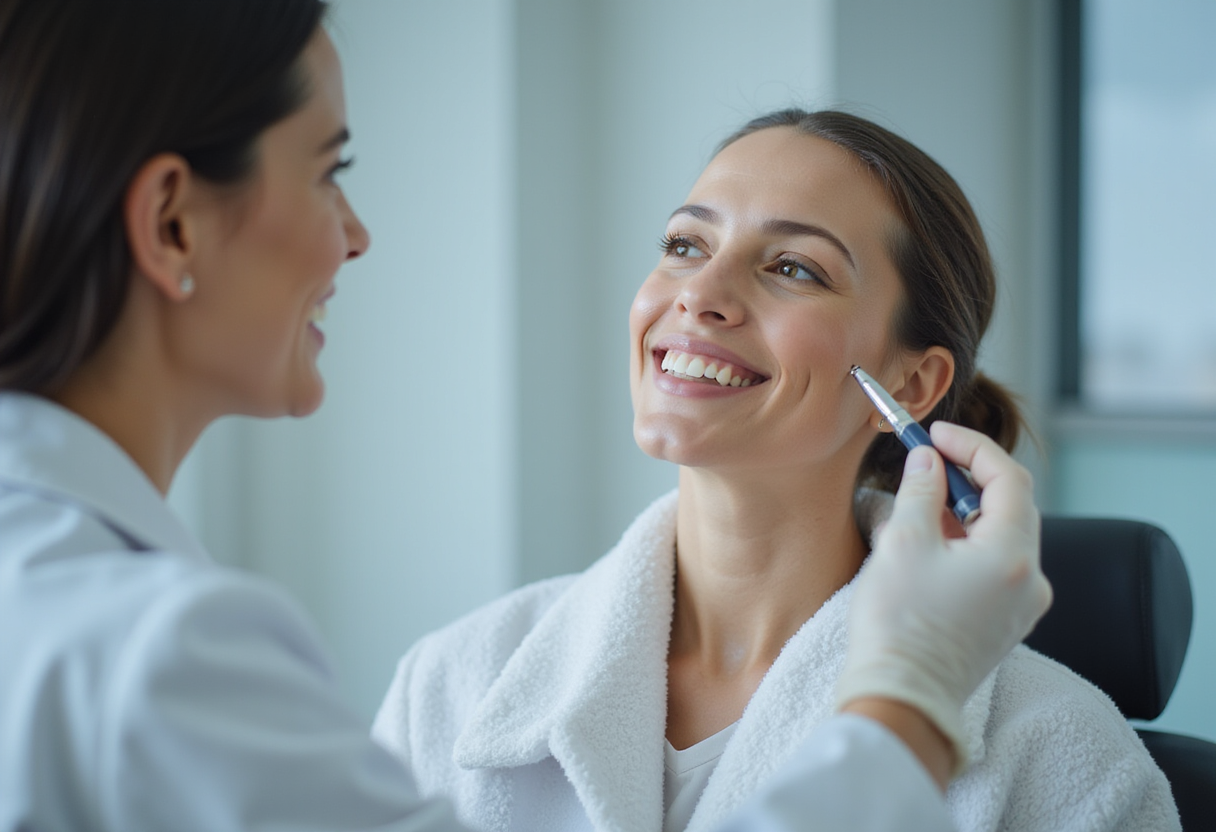
Surgery Is Back: Plastic Surgeons Map 2027's Big Shifts
The Aesthetic Society's president and president-elect say GLP-1 weight loss, revision demand and 'aesthetic longevity' will define plastic surgery in 2027 — with surgery back, not replacing injectables.
Updated
The takeaway
- Jamil Ahmad, MD, president of The Aesthetic Society, says 'surgery is back' after 20 years of nonsurgical treatments being pushed beyond what they can address.
- Nolan Karp, MD, president-elect of The Aesthetic Society, reports former patients returning 50 pounds lighter on GLP-1s, needing revisions of past breast, tummy tuck and facelift procedures.
- 'Aesthetic longevity' — year-round optimization including nutrition, supplementation and maintenance — is expected to become a central concept in 2027.
Surgery is back on the agenda in aesthetic medicine, and the president of The Aesthetic Society says two decades of device-driven innovation partly explains why. "I think what's exciting today is that surgery is back," said Jamil Ahmad, MD, a board-certified plastic surgeon in Mississauga, Ontario and president of The Aesthetic Society. "We've had 20 years where really innovative treatments have come out, but these treatments have sometimes been pushed to try to address things that they can't address."
Ahmad and Nolan Karp, MD, a board-certified plastic surgeon in New York and president-elect of The Aesthetic Society, outlined the trends they expect to define plastic surgery in 2027. Both hold leadership roles in the specialty's main professional body, which gives them a direct view of what surgeons are debating and what patients now ask for.
Surgery returns, but not as the only answer
The renewed focus on surgery does not mean nonsurgical treatments are fading. "There's really a place for surgery, and these nonsurgical treatments and minimally invasive treatments are complementary," Ahmad said. "But there are still a lot of areas where patients have concerns where surgery really is the right answer."
Karp agreed that the minimally invasive segment keeps growing. "Minimally invasive surgery, minimally invasive devices, injectables, I think the reality is this area is just expanding and expanding," he said. "When I started, it didn't exist, and now it's really the majority of our umbrella. That is something that's not going to go away."
The practical change is sequencing. A patient may have surgery at one stage, use injectables or energy-based treatments at another, and work on skin quality in between. Ahmad argued that future surgeons must command the full range rather than treat surgical and nonsurgical aesthetics as separate domains. "Being an excellent surgeon, understanding the role for nonsurgical and minimally invasive treatments, but then also really trying to help our patients have longevity in the result," he said, is becoming part of comprehensive care.
GLP-1s are creating a new patient population
Karp named GLP-1 weight-loss medications as one of the most significant changes he is watching. "We're seeing patients that we never ever saw before," he said. "We're seeing patients that were our old patients. I had patients I haven't seen for 10 years, and now all of a sudden they come back and they're 50 pounds lighter."
Major weight loss also sends former patients back for revisions of procedures performed years earlier. "The breasts I did, the tummy tuck I did, maybe the facelift I did are all not really working for them," Karp said. "Sometimes they're older, sometimes they're sicker, so doing cosmetic surgery is not quite as simple. It's a whole completely new area for us."
Loose skin and shifting proportions after significant weight loss raise new questions around timing, revision surgery and body-contouring procedures — questions both surgeons expect to stay central through 2027.
'Aesthetic longevity' enters the vocabulary
Ahmad expects the term aesthetic longevity to dominate professional conversation. "For two decades now we've really thought of it as surgical and nonsurgical, and these tend to be done at specific points in time," he said. "But the idea of aesthetic longevity is really 365 days a year, trying to optimize the way people look and keep them looking great for their entire life."
His definition covers more than procedures. "It's really what's happening day to day to try to give patients the best aesthetic outcome for the rest of their life," Ahmad said. "That covers a lot of things, including nutrition, supplementation, different types of treatments, particularly for longevity, wellness, maintenance of healthy weight."
The plan matters more than the procedure
Karp said education itself has had to expand because "it's not just about surgery." Ahmad sees the next generation of plastic surgeons needing expertise across surgery, nonsurgical care, minimally invasive options and maintenance strategies.
For patients, that could make 2027 less about chasing the latest treatment and more about planning several steps ahead. Ahmad framed the direction simply: "tying everything together."
Source: NewBeauty
More from Amara Osei
Show full bio
Staff writer covering media and advertising at Eurasian Beauty Journal.
51 articles