'AI can recommend a lipstick. It can't tell you how it feels'
At Glossy Pop NYC, The Lipstick Lesbians argued beauty consumers face a discernment problem, not an information problem — and AI can't supply the difference.
Updated
The takeaway
- The Lipstick Lesbians — Alexis Androulakis and Dr. Christina Basias Androulakis — spoke at the Glossy Pop NYC panel earlier this month.
- The couple said: 'Beauty consumers do not have an information problem; they have a discernment problem.'
- The platform has a following of nearly 1.8 million and extends into consulting, speaking and an eight-hour paid course on lip, cheek, eye and face product development.
"Beauty consumers do not have an information problem; they have a discernment problem." That claim anchored the Glossy Pop NYC panel earlier this month featuring Alexis Androulakis and Dr. Christina Basias Androulakis, the married couple behind The Lipstick Lesbians beauty education platform.
The duo built their argument around a paradox: consumers have more access to product information than ever, yet less ability to judge what is credible. Their platform exists to close that gap.
Alexis Androulakis has worked across makeup artistry, product development and consulting. Dr. Christina Basias Androulakis holds a Ph.D. in education and technology. Together they have attracted a following of nearly 1.8 million by explaining how beauty products are formulated, packaged and marketed.
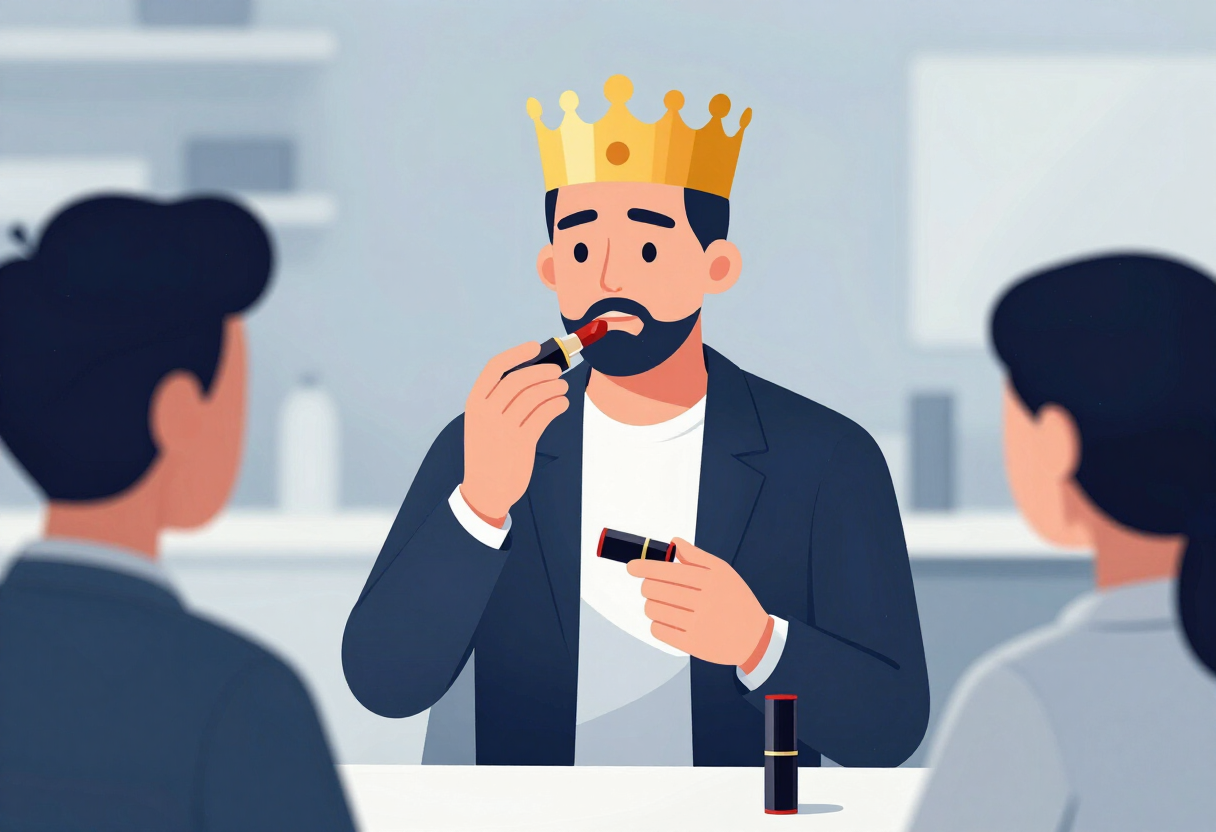
The panel's sharpest line addressed the limits of artificial intelligence in beauty retail. "AI can recommend a lipstick. It can't tell you how it feels." The distinction matters as brands pour resources into algorithm-driven shade matching and personalized recommendation engines. Algorithms can process data, the couple argued, but cannot replicate the sensory judgment and lived experience that drive actual purchase satisfaction.
Their position on technology is not adversarial. Better technology, they argued on the panel, will make human expertise more valuable, not obsolete. As AI-generated content floods social feeds and product claims multiply, the ability to explain formulation, packaging and marketing mechanics becomes a differentiator — for creators, consultants and brands alike.
The business case supports that thesis. The Lipstick Lesbians has expanded beyond social content into three revenue streams: product-development consulting, professional speaking, and an eight-hour paid course covering the development of lip, cheek, eye and face products. The course structure signals who the couple sees as their next audience — professionals and aspiring formulators who need depth, not entertainment.
Beauty misinformation framed the discussion throughout. With nearly 1.8 million followers as proof of demand, the couple's model treats education as the counterweight to hype: explain the mechanics of formulation and packaging, and consumers gain the tools to evaluate claims themselves.
The panel also touched on meaningful innovation — the difference between genuine product advancement and repackaged familiarity. That distinction sits at the center of the discernment problem the couple identified, and it is the one AI recommendation engines are least equipped to solve.
For brands and retailers, the implication is direct: as recommendation technology standardizes, the sensory and educational layer around products — the part only humans can currently deliver — becomes the competitive ground.
Source: Glossy
More from Grace Kim
Show full bio
Correspondent covering media and advertising at Eurasian Beauty Journal.
38 articles