VC-9704
Trends & CultureProduct dossier
Beauty Beyond Bars Gave Three Rikers Women Makeovers Before Release
Beauty Beyond Bars, founded by 21-year-old advocate Lea Nepomuceno, gave three women at Rikers Island silk presses and full glam before their release. Twice-monthly events are next.
Counter notes
- Beauty Beyond Bars, founded by 21-year-old Lea Nepomuceno, ran a one-day makeover pilot for three women at the Rose M. Singer Center on Rikers Island.
- As of June 13, 2026, around 84% of Rikers inmates have not been convicted of a crime, according to the New York City Council.
- In 2024, 719 sexual assault lawsuits were filed against the Department of Correction by female inmates under the Adult Survivors Act.
- Almost one third of formerly incarcerated people return to prison within three years; their unemployment rate exceeds 27%.
- Beauty Beyond Bars aims to run events at Rikers twice a month and scale an inside-out re-entry model to cities nationwide.
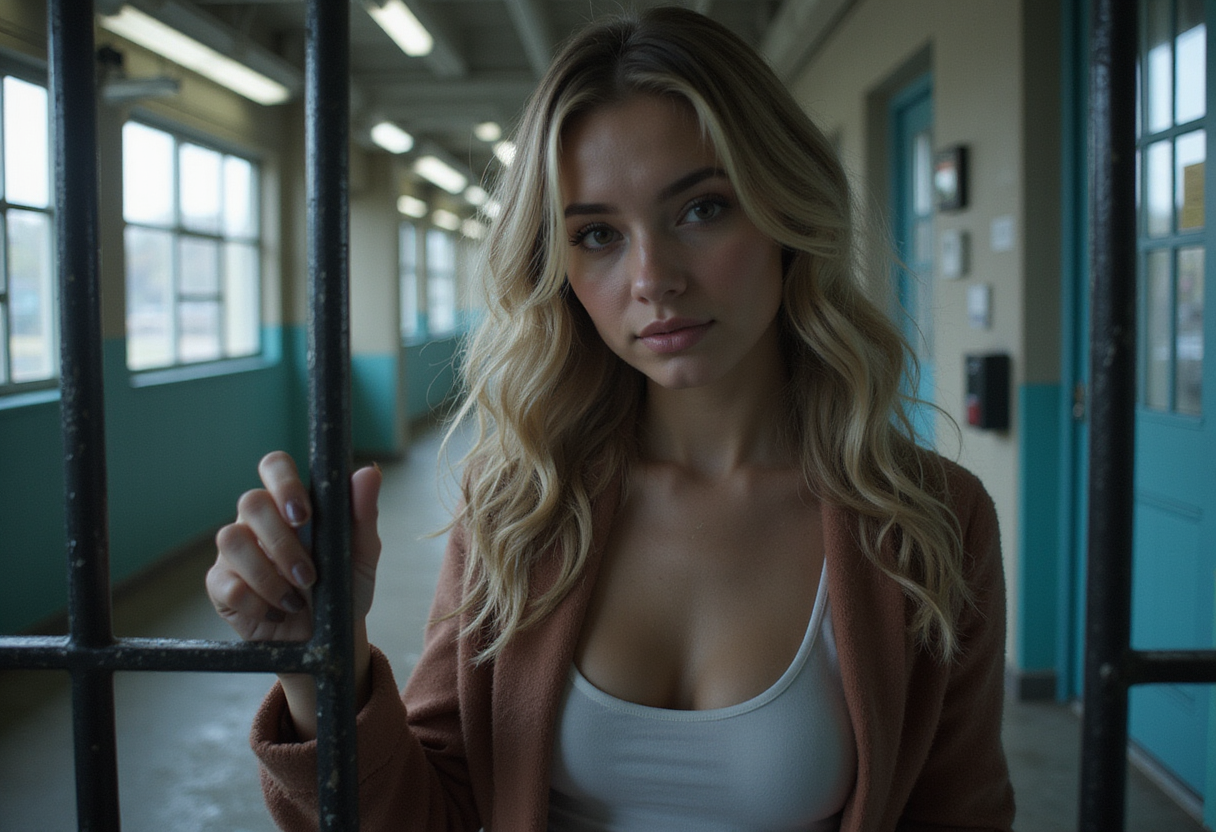
Rikers Island, the facility once called the "most infamous jail in the US," now has a working beauty salon pilot: on a single day in 2026, three incarcerated women at the Rose M. Singer Center received full hair and makeup transformations from a Manhattan salon team before their release dates.
The program, run by the nonprofit Beauty Beyond Bars, partnered hairstylist Julie Dastine and her Citryne Rose salon in Manhattan with New York-based makeup artist Maricela Saucedo. It was founded by 21-year-old criminal justice reform advocate Lea Nepomuceno, whose organization delivers essential beauty and hygiene products to incarcerated people.
The salon sits in Rosie's recreation area, next to vocational programs, cosmetology lessons and college classes. The mirrors are not made of glass; they are polycarbonate, a plastic material that mimics the look of a wonky funhouse reflector, installed to prevent shards from being used as weapons. Armed guards stood right outside the door.
Who received the makeovers?
Three women serving short, court-ordered sentences at Rosie's, the only facility in the Bronx complex that houses women and gender-expansive people:
- Daesha Holloman, 31, due for release in November, received a silk press and trim resulting in a long bob after six years of wearing a hijab on-and-off.
- Adia Charles, 28, who has worn locs for almost five years, had her half-red, half-blonde color refreshed along with a twist out.
- Lizette Lugo, 47, six months into her stay, asked Dastine to make her blonde to cover the grays that grew in during her incarceration. She was released the following Tuesday.
The women did not know they had been chosen until right before entering the salon. "They didn't tell us this was happening," Holloman said.
What do beauty routines look like behind bars?
Access to products is severely limited. "The only thing I have access to is shampoo and grease, and a comb that's thinner than this," Holloman said, pointing to a tiny brush.
Charles, incarcerated for four months, said the hot water dries out her locs, and the only option, hair grease, weighs them down. "When you look good, you feel good," she said. "I can't wait to get out of here and go to the nail salon and get a facial."
Incarcerated women across the US improvise. "They melt down the bars of Corcraft [soap] and it becomes a thick gel consistency," Charles said. "They use that for edge control or gel." Corcraft employs incarcerated people in New York correctional facilities for around $0.65 an hour. Other reported hacks include rubbing deodorant against colored magazine pages to make eye shadow and threading eyebrows with tampon strings.
Lugo works as a suicide-prevention aide in her housing unit and buys products from the commissary: foundation at $11, CoverGirl and L'Oréal eye shadow, mascara, eyeliner, ChapStick and Wet n Wild lipstick. She avoids washing her hair because the commissary shampoo burns her scalp, she said.
Holloman finds commissary makeup not worth the money. "The foundation is not the best quality, and we use sponges that you clean with, not sponges you're supposed to use for your face," she said, as Saucedo blended Dior foundation on her face.
How did the day unfold?
The transformations drew a crowd. Jail staff gathered outside the salon, cheering, clapping and singing the chorus of Eve's "Who's That Girl" when Holloman "activated" her bob. Some had tears in their eyes.
"The feeling that I have right now, I never knew I would feel like this," Holloman said. "We have real beauty. Like natural, actual beauty."
Each woman changed into donated professional clothing from Rosie's "boutique" and received Polaroid "headshots" to be mailed to family. "I wonder if he'll know it's me, because I look totally different [from my mugshot]," Lugo said of her son. The difference extends beyond hair and makeup: she received dentures from Rikers' basic dental services after three years without teeth.
Holloman has not always felt this positive. "The Department of Corrections can [make] you lose yourself, for a lack of better words," she said. "You have to be strong enough to not fall into the dehumanizing situation… You have to look at the end of the tunnel. It's hard. I have my days where I forget I am going home."
Her daughter was four months old when she arrived at Rikers. "I'm bigger than being incarcerated, and there's people who actually believe in me," Holloman said. "I feel like if they didn't, I wouldn't have been considered [for this program]."
What happens next?
Beauty Beyond Bars hopes to run similar events at Rikers twice a month. "Our long-term goal is to build an inside-out re-entry model," Nepomuceno said. "Programming and career training inside correctional facilities, paired with salons on the outside that employ graduates of our programs. Ultimately, we hope to scale this model to cities across the country." She identified long-term fundraising as the organization's biggest current challenge.
At press time, no concrete plans existed for the next program, though Dastine, Saucedo and Nadely Tavarez, executive director of facility program at the Rose M. Singer Center, all expressed interest in bringing it back. "I feel that these women can gain confidence [in this program] after going through such a traumatic time in their lives," Tavarez said.
The context remains stark. According to the New York City Council, as of June 13, 2026, around 84% of Rikers inmates have not been convicted of a crime. In 2024, 719 sexual assault lawsuits were filed under the Adult Survivors Act against the Department of Correction by female inmates, according to Gothamist. The City Council voted in 2019 to close the island's facilities by August 2027, but Mayor Zohran Mamdani's office says the new proposed deadline is 2032 due to construction delays from the COVID-19 pandemic.
Almost one third of formerly incarcerated people return to prison within three years, according to the Council of State Governments Justice Center, and they face an unemployment rate of over 27%.
"Providing this type of service on one day to just a few women, I don't know if it's going to make a dent in changing carceral policy," said Lauren Brinkley-Rubinstein, PhD, a professor at Duke University who studies the health effects of the criminal legal system. "But we also know that individual differences can be made with the smallest adjustments or kindness."
"I'm not sure that a headshot alone, for example, or hair products alone is going to have a long-term impact," said Deborah Koetzle, PhD, director of the Corrections Lab at John Jay College of Criminal Justice, adding that career training and employment linkage before release matter more.
All three women reported feeling more confident and ready for positive change after release. "Being in here can really bring you down," Charles said. "I feel different walking out. I feel more confident. I feel like myself again, you know?"
Holloman, still serving her sentence, put it plainly: "I really want to hit the ground running when I leave here. And I could never come back here ever again."
via nytimes.com (Original)
More from Daniel Okafor
Show full bio
News editor covering business strategy at Eurasian Beauty Journal.
55 articles