VC-1657
HairProduct dossier
Halle Berry Revives the Curtain Crop for Fall
Halle Berry's hairstylist Renato Campora unveiled her new curtain crop on Instagram. Adam Reed explains why the cheek-length cut suits women over 50 and every hair type this fall.
Counter notes
- Halle Berry's hairstylist Renato Campora revealed her curtain crop — an ultra-short fringe with a softer, flared silhouette — on Instagram this week.
- The cut requires a trim every six to eight weeks to maintain its silhouette, according to celebrity hairstylist Adam Reed.
- Reed says the style adapts to all hair types: more density through the outline for fine hair, internal weight removal for thick hair, and working with natural texture for waves and curls.
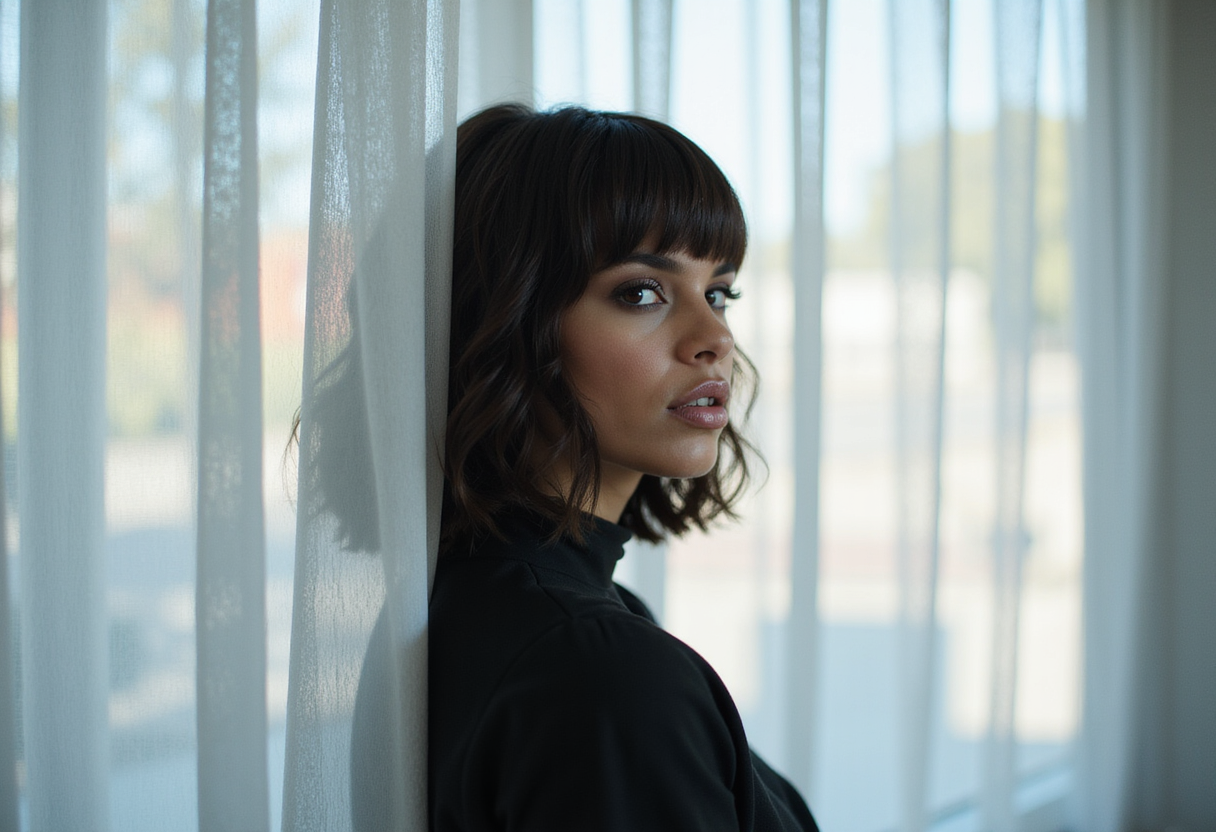
Halle Berry has brought back her ultra-short fringe — this time with a softer, more flared silhouette her hairstylist Renato Campora calls the curtain crop. Campora revealed the transformation on Instagram this week, and the cheek-length cut is already positioning itself as one of the most elegant haircuts for women over 50 this fall.
The timing is no accident. Fashion Month has filled runways and streets with fresh haircuts and colors, and celebrity hair changes — including recent looks from Demi Moore and Berry — often signal the trends that define the months ahead.
What Is the Curtain Crop?
Celebrity hairstylist Adam Reed, whose clients include Madonna and Reese Witherspoon, defines the curtain crop as a "short, beautifully tailored haircut with softness and length left throughout the front." It sits between curtain bangs and a contemporary bob.
"The back and sides are cropped and considered while the fringe is kept longer and opened through the center," Reed says.
The look rests on softness around the hairline, movement through the top, and enough length at the front for versatile styling — pushed back, parted, tucked, or left to fall naturally.
"The key is not to make it too rigid or overly precise; it should feel personalized, rather than like you've simply had the 'haircut of the season,'" Reed says.
Berry's version incorporates a curly bob. Other references may feature slightly longer lengths, sleeker textures, or more pixie-inspired shapes.
Why It Suits Mature Hair
Reed says fall typically pushes beauty lovers toward structure, but he has recently noticed a subtler shift: a desire to move beyond one's comfort zone while keeping individual identity.
"Someone who has lived in a bob or longer layers might suddenly want to expose the neck or take the sides shorter, but that longer curtain gives them familiarity and versatility," he says.
He adds: "I love that contrast, strong shape, and soft finish. It also looks incredible with autumn and winter clothes—collars, tailoring, scarves, or knitwear—as the haircut becomes part of the silhouette."
The practical case is just as strong. Shedding, dryness, and frizz can increase with age, and shorter, easy-to-style cuts with clever cutting techniques can enhance movement and volume. Berry's crop does not chase an anti-aging effect; it delivers a modern, lived-in, personalizable result.
Does It Work for Every Hair Type?
Yes, with adaptation. "On finer hair, this means keeping a little more density through the outline to make the hair appear fuller, while with thick hair, we can remove internal weight to aid movement," Reed says.
For wavy and curly hair, he works with the natural texture rather than against it, so the curtain is often "much less controlled."
Lifestyle ultimately matters more than texture. "This is brilliant for somebody who wants short hair but still wants something to play with; that longer front gives you so many different ways to wear it," Reed adds.
Before the Big Chop
Reed's advice: do not grow attached to a photograph. References help, but the conversation with your stylist matters more.
"Talk about what it is you love about your photos. Is it the fringe? The exposed neck? The texture? The feeling of it? Then, let your hairdresser interpret those elements around your own texture, density, and features," he says.
Nervous clients should avoid going too short at the first appointment. "The beauty of the curtain crop is the juxtaposition of short and long. Keeping that softness through the front can make quite a dramatic change feel surprisingly wearable," Reed says.
Maintenance requires a trim every six to eight weeks to preserve the silhouette — though, as Reed notes, "that depends completely on how quickly your hair grows and how much you enjoy the grown-out shape."
Styling It
Everyday styling is low-effort. Professionals suggest applying a small amount of moisturizing cream or hair mousse to damp hair for softness and control, then using fingers while drying rather than pursuing a perfect blow-dry.
Once dry, a little styling wax adds separation and lived-in texture. "Start with less and build; you should still be able to run your hands through it," Reed says.
"And don't fight what it does the next morning; sometimes the best version of this crop is the one that's been slept on, pushed around, and has developed a little personality."
With Berry setting the benchmark this fall and the cut adaptable across density, texture, and age, the curtain crop looks set to move from celebrity Instagram to salon appointment books.
via instagram.com (Original)
More from Amara Osei
Show full bio
Staff writer covering media and advertising at Eurasian Beauty Journal.
57 articles