Dyson CameraJet Failures Force Isolation of Faulty Jet Tubes
Dyson confirmed a jet tube process issue caused water seepage in CameraJet units. The $499 toothbrush-flosser hybrid is out of stock with no return date.
Updated
The takeaway
- Dyson confirmed a process issue in one production batch of jet tubes caused water seepage, prompting the company to isolate impacted products and creating an out-of-stock position on dyson.com and sephora.com.
- The $499 CameraJet combines a toothbrush, water flosser, and camera that fires mouthwash between teeth; it runs on 16 million lines of code and an AI trained on 470,000 dental images.
- Allure reports Dyson has shared only one clinical study, comparing the CameraJet to a manual toothbrush, despite launch claims of 69 percent better plaque removal than premium electric toothbrushes in hard-to-reach areas.
One production batch of Dyson CameraJet jet tubes experienced a process issue that allowed water seepage and degraded performance, the company has confirmed, as the $499 toothbrush-water-flosser hybrid sits out of stock on dyson.com and sephora.com.
A Dyson spokesperson told Allure: "unfortunately, one production batch of jet tubes experienced a process issue, creating a potential for water seepage which affected the performance of a small number of products. We took what we believe to be the right decision to isolate impacted products, which resulted in an out-of-stock position. We are now in full production and shipping product to our partners. We are sorry that we have let down our loyal customers and we will do all we can to support them."
Dyson did not provide a date for the CameraJet's return to sale and did not answer Allure's questions about the device's return policy or whether a formal recall would be issued.
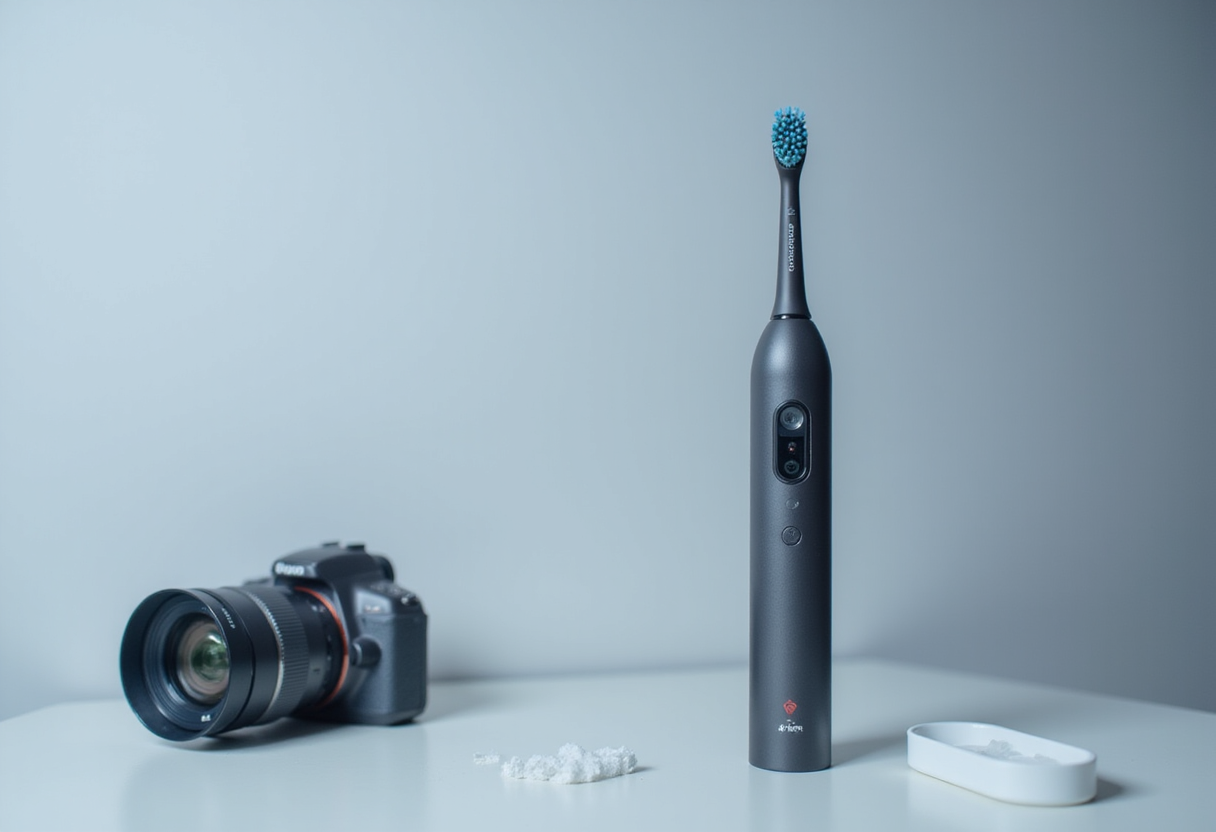
The CameraJet launched in early September at an event in Paris as the world's first toothbrush-water-flosser hybrid. It uses a camera the size of a pencil tip to fire mouthwash between teeth during brushing, combining three dental hygiene steps into one. The device runs on 16 million lines of code, and its AI system for detecting tooth gaps was trained on 470,000 dental images. It connects to the Dyson app, which can livestream the inside of the user's mouth while brushing; Dyson said the videos are not stored in its app or in the cloud.
Allure's executive beauty director Jenny Bailly visited Dyson's UK labs last spring for a preview of the device and noted the length of its development: "The idea first arose nine years ago, and they spent six years working on the CameraJet—that's one more than the bagless vacuum cleaner that debuted in 1983 or the hair-dryer that blew us away in 2016."
Early failures documented
The Allure editor who tested a complimentary unit received from Dyson on launch day reported a cascade of malfunctions: the diaphragm pump slowed, the conical jet misfired, and the device — which is designed to vibrate at 245 times per second — eventually stopped turning on after nearly three weeks of use. The editor had initially said on camera that she would pay the full $499 price for a replacement, many years in the future.
Complaints have surfaced across social media from consumers who paid $500 for the device. An editor at Consumer Reports said her test unit from Dyson died "less than 24 hours" after she opened the box, before she ever used it. Another Allure colleague still testing a CameraJet reports that it turns on, but the automatic jet firing has slowed dramatically.
The failures echo the rocky launch of another premium Dyson category. When the $400 Supersonic hair dryer debuted in 2016, its price drew skepticism before performance won consumers over. The CameraJet's cobalt blue unit and its charging and refill dock cut a similarly premium figure on the bathroom counter.
Clinical claims still unverified
Dyson's launch press release claims the CameraJet removes plaque up to 69 percent more than "market-leading premium electric toothbrushes in hard-to-reach areas." Allure reports it has requested clinical data on the device since it was known only by the prototype name "682," and the only study shared so far compared the CameraJet to a manual toothbrush.
For now, the Allure editor has returned to a Philips Sonicare model bought a few years ago. Until Dyson supplies independent clinical evidence and restocks the device, the CameraJet — nine years in development — faces a credibility gap that six years of engineering did not anticipate.
Original: instagram.com
More from Amara Osei
Show full bio
Staff writer covering media and advertising at Eurasian Beauty Journal.
54 articles